Accountability and Its Role in Transformation
Accountability is the foundational pillar that bridges the gap between intentions and actions during growth. It serves as a mirror reflecting true progress while removing the option of self-negotiated excuses. By inviting shared discipline, it provides the endurance required to sustain radical transformation and prevents the drift toward mediocrity.
By K.A. Perkins · About me · Author profile ·
How this article was made: drafted with AI writing tools from the Tribal Challenge curriculum and published under the editorial direction of K.A. Perkins. Scripture references should be read in context.
Why is accountability important for personal growth?
In the relentless pursuit of personal growth and transformation, we often seek grand strategies, intricate plans, and sudden epiphanies. Yet, the most potent catalyst, often overlooked, is the unwavering power of accountability. It’s the invisible hand that steadies our resolve, the gentle push that moves us forward, and the mirror that reflects our true progress. At Avodah Dynamics, we recognize accountability not merely as a taskmaster, but as a foundational pillar upon which extraordinary lives are built. Without it, even the most inspired vision eventually dissolves into the comfort of mediocrity.
Transformation is rarely a solitary endeavor. While the decision to change begins in the quiet chambers of the heart, the endurance to sustain that change is forged in the presence of others. The power of accountability in personal transformation lies in its ability to bridge the gap between our intentions and our actions. We are masters of self-negotiation; we can talk ourselves out of a 5:00 AM workout or justify a lapse in discipline with frightening ease. Accountability removes the option of the "easy out."
Think of the greatest leaders throughout history, from ancient kings to modern innovators. What set them apart? Beyond vision and charisma, it was an intrinsic sense of responsibility, a commitment to their word, and a willingness to be held to a higher standard. This isn't just about external pressures; it’s about an internal compass that guides us towards our best selves, a compass sharpened by the understanding that our growth impacts not only ourselves but also those we lead and serve. For those ready to embark on such a journey, the Tribal Challenge offers a structured path to harness this power through 100 days of radical discipline.
What does the Bible say about accountability and stewardship?
Biblical wisdom, an enduring wellspring of leadership principles, consistently underscores the importance of accountability. From the parables emphasizing stewardship to the epistles advocating for mutual encouragement and correction, the message is clear: we are called to live purposeful lives, accountable to God, to ourselves, and to our communities. In the Kingdom of God, there is no room for the "lone wolf" mentality that the modern world often celebrates as independence.
Proverbs 27:17 states, "As iron sharpens iron, so one person sharpens another." This isn’t a passive process. For iron to sharpen iron, there must be contact, friction, and pressure. It is often uncomfortable. Yet, the result is a tool that is more effective, more resilient, and ready for the Master’s use. When we isolate ourselves, we become dull. Our edges round off, our discernment fades, and our discipline withers. True power of accountability in personal transformation is found when we invite Godly men to speak truth into our lives, even when that truth stings.
Furthermore, Galatians 6:2 instructs us to "Carry each other’s burdens, and in this way, you will fulfill the law of Christ." Accountability is not a one-way street of surveillance; it is a mutual exchange of support. Within a Tribe, we carry the weight of the mission together. When one man stumbles, the Community lifts him up. When one man excels, the Tribe is elevated. This biblical framework transforms accountability from a chore into a sacred duty of stewardship.
Why do we behave better when others are watching?
Why does having a witness change our behavior so fundamentally? Psychologically, the human brain is wired for social connection and status. When we make a commitment to ourselves, we only risk a blow to our self-esteem—which our ego is expertly trained to defend and rationalize. However, when we make a commitment to a Tribe, the stakes are elevated. We are now performing for the collective, and our integrity is on display.
This "audience effect" triggers a higher level of executive function. We become more mindful of our choices because we know a reckoning is coming. In the context of the power of accountability in personal transformation, this manifests as:
- Increased Consistency: Knowing that your stats will be reviewed by the Tribe keeps you in the game when motivation wanes.
- Objectivity: We are often poor judges of our own progress. A Community provides an objective baseline to measure where we actually stand versus where we think we are.
- The Cortisol of Consequence: A healthy level of external pressure reduces the "drift" that happens when we operate in private.
Within the Tribal Challenge, this isn't about shame; it’s about the Radical Truth. If you missed your mark, you own it. You don't hide it. The psychological release of owning a failure in front of a supportive Community provides the clarity needed to ensure it doesn't happen again. It turns a "loss" into a lesson, fueled by the collective wisdom of the group.
How does a tribe differ from a social club?
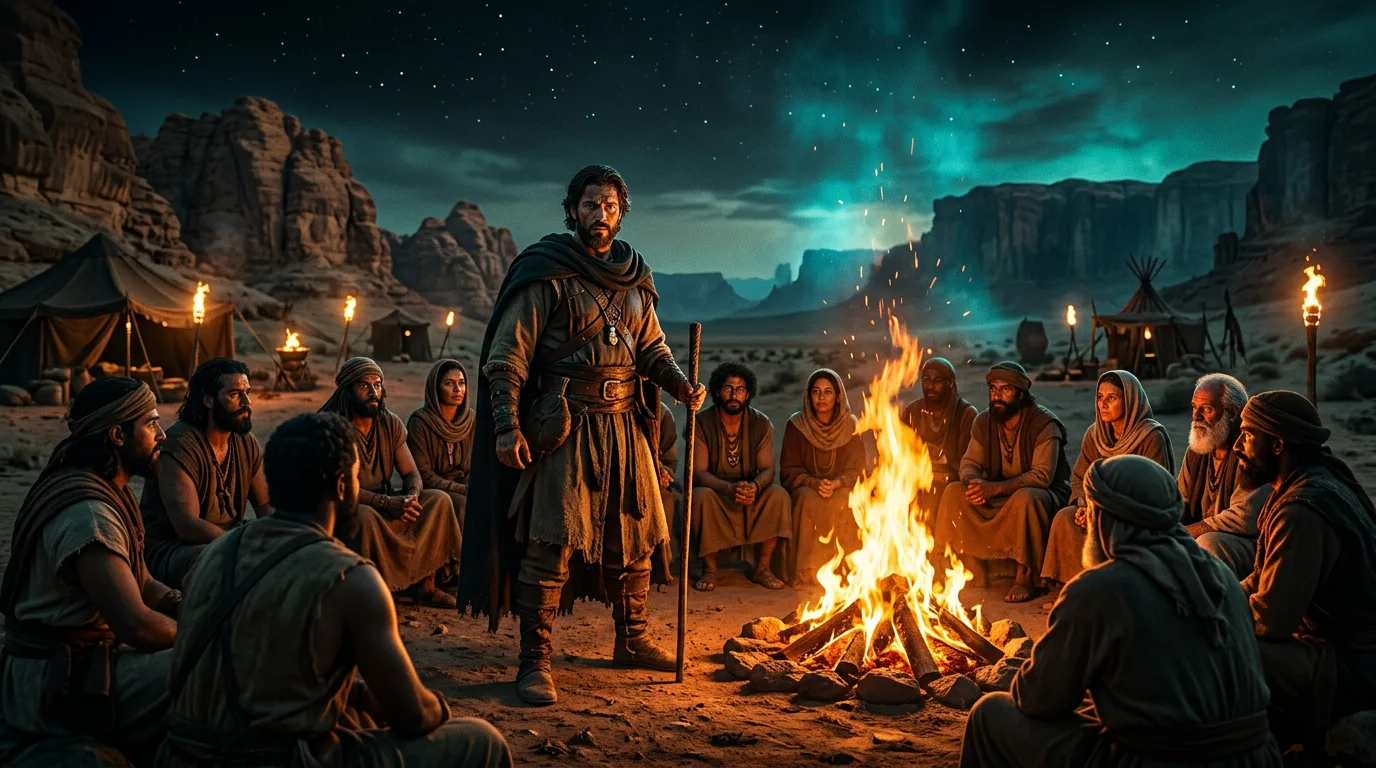
True accountability is not found in "coffee shop fellowship." It is not found in polite conversations where everyone agrees and no one is challenged. To tap into the real power of accountability in personal transformation, you need a Tribe—a group of men committed to the same rigorous standard, moving toward a common objective with military-grade precision.
A Tribe functions differently than a social club. In a social club, the goal is comfort. In a Tribe, the goal is the Mission. This requires vulnerability, which is the prerequisite for growth. You must be willing to show your scars and your struggles to men you trust. This trust is built on the anvil of shared experience. When you go through 100 days of discipline together, you are bonded in a way that casual acquaintances never will be.
The Community serves as a fortress. In a world that seeks to feminize men and soften the standards of the Gospel, the Tribe stands as a bulwark for traditional, disciplined, and faith-driven masculinity. We hold the line for one another. If one man begins to compromise his values, the Tribe calls him back to the standard. This collective vigilance is what makes long-term transformation possible.
Common Mistakes to Avoid
Even with the best intentions, many men fail to utilize accountability effectively. Avoid these pitfalls to ensure your transformation remains on track:
- Choosing "Yes Men": If the people holding you accountable are afraid to hurt your feelings, they aren't helping you. Iron doesn't sharpen iron by being soft. You need men who will call you out on your excuses without apology.
- Vague Commitments: Saying "I want to get better" is not a goal; it's a wish. Accountability requires specific, measurable actions. The Tribal Challenge thrives because the requirements are black and white. You either did the work, or you didn't.
- The "Lone Ranger" Relapse: Thinking you have "graduated" from the need for a Community. Transformation is a lifelong process. The moment you believe you no longer need the Tribe is the moment your decline begins.
- Hiding the "Small" Failures: We often only share the big collapses, but personal erosion starts with small compromises. Accountability must cover the minutiae of your daily habits.
- Lack of Reciprocity: If you are always receiving but never pouring back into the Community, the relationship is parasitic. You must be as invested in your brother’s growth as you are in your own.
The Role of Stewardship in Personal Mastery
At Avodah Dynamics, we teach that your life is not your own. You have been bought with a price, and you are a steward of the talents, time, and physical body God has granted you. When you embrace the power of accountability in personal transformation, you are essentially improving the "ROI" (Return on Investment) for the Kingdom.
Accountability forces us to ask: "Am I being a good steward of the potential God placed within me?" This perspective shifts the focus from selfish ambition to divine service. If you are out of shape, disorganized, and undisciplined, you are a less effective tool for the Great Commission. By inviting a Tribe to hold you to a higher standard of health, spiritual depth, and financial discipline, you are refining yourself for the work you were created to do.
This is why the 100-day window is so critical. It is long enough to break the back of old habits and short enough to maintain an intense focus. It provides a container for stewardship where every day counts, and every action is accounted for before God and the Community.
How to Apply This Today
If you are ready to move beyond "wishing" for change and start executing, follow these steps to activate accountability in your life immediately:
- Audit Your Circle: Look at the five people you spend the most time with. Do they hold you to a higher standard, or do they enable your excuses? If they don't challenge you, you need a new Tribe.
- Publicly Declare Your Standard: Don't keep your goals secret. By stating your intentions to others, you create a social contract that you will be hesitant to break.
- Establish Daily Tracking: Use a scoreboard. Whether it's a physical journal or a digital app, you must record your wins and losses daily. What gets measured gets managed.
- Schedule a Weekly Reconnaissance: Meet with your Tribe or accountability partner once a week to review the "tape." Be brutally honest about where you failed and what you will do differently next week.
- Embrace the Friction: When someone calls you out, don't get defensive. Thank them. Recognize that their correction is an investment in your future self.
True transformation is an act of war against your lower nature. You would never go into battle without a unit; do not attempt to change your life without one either. The power of accountability in personal transformation is your greatest weapon in the fight for the man God called you to be.
The days of struggling in isolation are over. If you are tired of the cycle of starting and stopping, if you are ready to be tested, and if you demand more from yourself than the world expects of you, it is time to join the ranks. Stop making excuses and start building your legacy alongside men who will not let you fail. Step into the arena, embrace the fire, and take your place in the Tribal Challenge today.
Which scripture passages does this article reference?
Read these passages in context. Devotional applications are interpretations, not medical advice or promises of results.