War Room Prayer: A Christian Strategic Framework
War room prayer is a structured posture of active spiritual combat involving fixed time, place, and intent. This Christian strategic framework utilizes the ACTSD rhythm—Adoration, Confession, Thanksgiving, Supplication, and Declaration—to move beyond vague petitions. It provides the spiritual infrastructure necessary to win internal and external battles before they are fought in the open.
By K.A. Perkins · About me · Author profile ·
How this article was made: drafted with AI writing tools from the Tribal Challenge curriculum and published under the editorial direction of K.A. Perkins. Scripture references should be read in context.
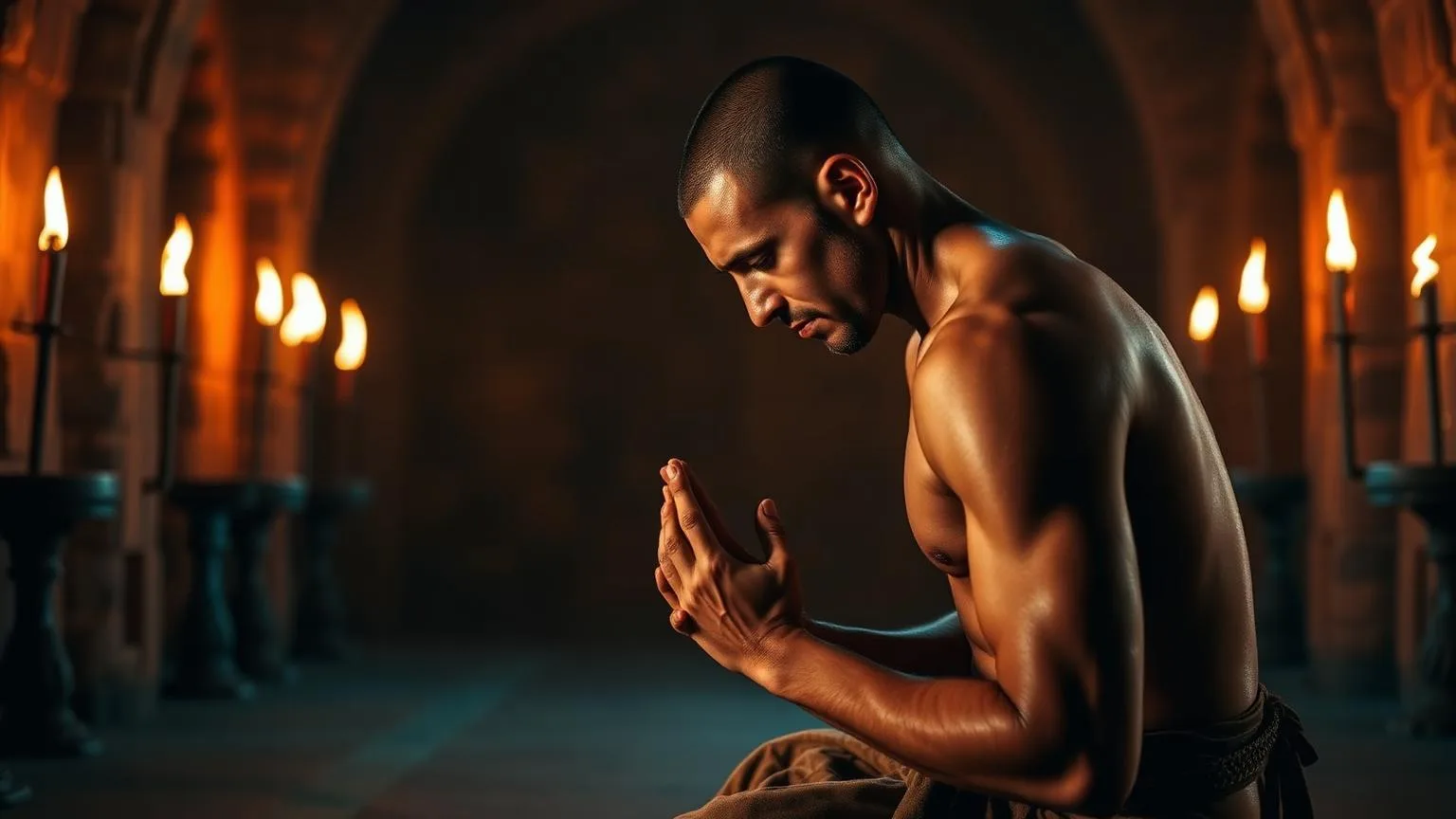
The "War Room" is not a metaphor for a passive, quiet meditation session. It is a posture of active spiritual combat. It is a fixed place, a fixed time, and a fixed intent. In the Tribal Challenge, we recognize that the battles of the mind, the family, and the marketplace are won or lost in the secret place before they are ever fought in the open. However, the question most Christians stall on is not whether to keep a war room—it is the tactical execution: What to pray in the War Room once the door is shut.
Without a framework, prayer often dissolves into a repetitive list of grievances or a vague "bless my day" sentiment that lacks the teeth required to move mountains. To dominate your day and lead your Tribe, you need a Christian prayer framework that is structured, scriptural, and sustainable. This is not about religious performance; it is about building the spiritual infrastructure necessary to withstand any siege.
What is the ACTSD prayer method?
Inside the Tribal Challenge, we utilize a specific rhythm known as ACTSD. These five movements ensure that your prayer life remains balanced between internal transformation and external petition. By following this cadence, you ensure that you are not just "venting" to God, but actively engaging with His sovereignty.
A — Adoration: Centering on Sovereignty
Begin by naming God for who He is, not for what you need. Adoration is the act of recalibrating your heart to the size of your God. When you start with your problems, your problems look massive. When you start with the Creator, your problems find their proper perspective. Spend 3-5 minutes here. Verbally acknowledge His attributes: "You are sovereign. You are the Alpha and Omega. You are my Shepherd." 1 Chronicles 29:11 says, "Yours, O Lord, is the greatness and the power and the glory and the victory and the majesty." Direct your focus upward before you look inward.
C — Confession: Clearing the Line of Communication
Unconfessed sin acts as static on the line. Confession must be surgical, not general. Do not say, "God, forgive me for my sins." That is too vague to produce change. Say, "Father, I was harsh with my wife at 7:14 AM because of my own ego." Or, "I allowed my eyes to linger on that image at 2:00 PM." Specific confession produces specific repentance. When you name the sin, you strip it of its power. This is the cleanup phase of the war room session.
T — Thanksgiving: The Weapon Against Anxiety
List five concrete gratitudes from the last 24 hours. Thanksgiving is a tactical strike against the spirit of entitlement. Entitlement says, "I deserve more." Thanksgiving says, "I have been given much." Research and scripture both confirm that gratitude disarms anxiety faster than almost any other mental practice. By speaking your gratitudes out loud, you train your brain to hunt for the evidence of God’s goodness in the middle of the conflict.
S — Supplication: Bringing the Battle to the Throne
This is where you make your requests. In the Tribal Challenge, we teach men to be precise. Bring the battles by name: marriage, calling, fear, finances, health, or a specific person you are leading. Avoid the "God be with them" prayers. Instead, pray, "God, give my business partner clarity on the contract negotiation today." God answers precise prayers more visibly than vague ones. Precision shows you are paying attention to the work He is doing.
D — Declaration: Speaking the Verdict
This is the "war" part of the war room. In the Declaration phase, you speak scripture out loud over the battle. You are not asking God to do something; you are declaring what He has already said. If you are battling fear, you declare 2 Timothy 1:7: "God has not given me a spirit of fear, but of power, love, and a sound mind." Declarations are the verdicts of heaven spoken into the chaos of earth. They are the final word on your situation.
What are some advanced war room prayer strategies?
Once you have mastered the ACTSD rhythm, you must understand the nuance of spiritual offensive. What to pray in the War Room becomes a matter of discernment. Are you praying for protection (defensive) or for territory (offensive)?
- Praying for the Tribe: As a leader within your Community, your prayers should extend beyond your own skin. Intercede for the men to your left and right. Pray for their endurance during the 100 days. Pray that the "weak links" in your circle would be strengthened by the Spirit.
- Praying the "Hard Boundary": Ask God to hedge your life against specific temptations. If you struggle with pride, ask Him to bring humble circumstances that force you to rely on Him. This is "dangerous" prayer, but it is the kind that builds a warrior.
- The Silence Phase: Spend at least two minutes in total silence after your supplication. Often, we are so busy talking at God that we never give Him the space to speak to us. Carry a notepad. If a thought, a scripture, or a person’s name pops into your head, write it down. This is often the "intel" you need for the day's tasks.
Common Mistakes to Avoid
Even with a framework, many well-intentioned Christians fall into traps that neutralize their effectiveness in the War Room. To keep your prayer life from becoming a stagnant ritual, avoid these common pitfalls:
- Vagueness: General prayers yield general results. If you don't know what you're asking for, you won't recognize when God provides it. Be specific about numbers, names, and dates.
- Prioritizing Length Over Consistency: Many start with a 60-minute goal and quit by day three. Consistency outranks intensity. A 10-minute session every morning for 100 days will reshape your soul. A 90-minute session once a month will not.
- Praying Only for Comfort: The War Room is for training, not just for a "spa day" with God. If your prayers are only about making your life easier, you are missing the point of the Tribal Challenge. Pray for the strength to endure the hardship, not just for the hardship to disappear.
- Neglecting the Word: Prayer without Scripture is a monologue. Using the "Declaration" phase ensures that your prayers are grounded in God's revealed will rather than your own emotions.
- Treating it Like a Magic Mirror: Some approach the War Room expecting an immediate emotional high. Prayer is work. Sometimes it's dry. Sometimes it's boring. You show up because you are a disciple, not because you are seeking a "feeling."
How to Apply This Today
You do not need a theology degree to start your War Room practice today. You only need a closed door and a commitment to the process. Here is your tactical plan for the next 24 hours:
- Identify Your "Room": This can be a physical closet, a specific chair in your office, or a morning walk. The location must be consistent so your brain associates that space with prayer.
- Set Your Timer: Set a timer for 12 minutes.
- 2 minutes: Adoration (Who is God?)
- 2 minutes: Confession (Where did I miss the mark?)
- 2 minutes: Thanksgiving (What am I grateful for?)
- 3 minutes: Supplication (What do I need from Him?)
- 3 minutes: Declaration (What has He promised?)
- Use a Scriptural Anchor: If you don't know where to start for your Declaration, use Psalm 23 or Psalm 91. Read it aloud and replace the pronouns with your own name.
- Join a Community: Isolation is the enemy's favorite playground. Engaging in the Tribal Challenge provides the accountability needed to ensure this doesn't become another "good intention" that fades after a week.
What should I pray when I can't find the words?
There will be mornings when you enter the room and feel completely empty. The weight of the world, the exhaustion of the 100-day discipline, or the "dark night of the soul" can leave you silent. In these moments, you pray the Psalms. Open your Bible to Psalm 27 or Psalm 144 and pray it line by line. Insert your current situation into the text.
For example, "The Lord is my light and my salvation; whom shall I fear?" (Psalm 27:1) becomes "The Lord is the light over my failing business and my salvation from this debt; I will not fear the creditors." This is how you take the ancient Word and weaponize it for the modern day. Some of the most powerful War Room sessions happen on days when you bring absolutely nothing of your own to the table and rely entirely on the prayers already written in the Canon.
The Power of the Guided War Room
At the Tribal Challenge, we understand that focus is a finite resource. This is why we created the digital War Room—a workspace designed to remove distractions and guide you through the ACTSD rhythm. It provides timed sections and AI-driven scripture declarations tailored to the specific battle you are facing. Whether you are fighting for your marriage or your physical health, the system helps you find the exact Word of God needed to speak into that situation.
The habit of prayer is a muscle. Like any muscle, it requires resistance and repetition to grow. By following this framework, you move from being a "prayer enthusiast" to a spiritual operative. You begin to see the world not just through your physical eyes, but through the lens of God's sovereignty and His promises. You realize that you are not alone in the fight; you are part of a Tribe of men who are all kneeling before the same King, asking for the same strength to lead their families and communities with honor.
The door is waiting. The enemy is already moving. The question of what to pray in the War Room has been answered. Use the framework, speak the Word, and watch as the 100 days of the challenge transform not just your schedule, but your very soul. Consistency is the key to victory. Enter the secret place today, and stay there until the peace of God, which surpasses all understanding, guards your heart and your mind in Christ Jesus.
Ready to take your discipline to the next level? Stop trying to do this alone. Join the men who are reclaiming their strength, their focus, and their faith. Close the door, arm yourself with truth, and begin your 100-day journey by joining the Tribal Challenge.
Which scripture passages does this article reference?
Read these passages in context. Devotional applications are interpretations, not medical advice or promises of results.