Daniel Fast in Scripture: Every Verse Explained
The daniel fast in scripture appears in two short passages, Daniel 1:8-16 and Daniel 10:2-3, and neither one mentions 21 days, no-sweets rules, or a required food list. Daniel 1 describes vegetables and water for ten days; Daniel 10 describes no meat, no wine, no delicacies for three weeks. Most modern rules are additions.
By K.A. Perkins · About me · Author profile ·
How this article was made: drafted with AI writing tools from the Tribal Challenge curriculum and published under the editorial direction of K.A. Perkins. Scripture references should be read in context.
Key takeaways
- The Bible never commands a Daniel fast; it describes two episodes where Daniel restricted his diet for specific reasons.
- Daniel 1 records a ten-day test of vegetables and water, while Daniel 10 records a three-week mourning fast with no meat or wine.
- Modern rules like avoiding caffeine, sugar, and leavened bread are traditional additions, not textual requirements.
- Scripture does not prescribe a fixed duration for believers, meaning the length of your fast is a personal choice.
- Building a daily structure around prayer and scripture reading is more effective for consistency than relying on willpower alone.
What does the Bible actually say about the Daniel fast?
The Bible never commands a "Daniel fast." It describes two episodes where Daniel restricted what he ate, and modern practice is derived from those passages, not from any instruction to fast this way. In Daniel 1:8-16, Daniel refuses the king's food and wine and eats vegetables and water for ten days.
In Daniel 10:2-3, he mourns for three weeks, eating no meat, wine, or rich food (full text via BibleGateway).
That distinction matters if you're tired of starting over. A fast built on description, not command, is a choice you own rather than a rule you break. If you want the passages turned into a daily practice, the Daniel fast challenge maps the text to a structured 21-day track.
Where in scripture is the Daniel fast mentioned?
Two passages carry the weight: Daniel 1:8-16 and Daniel 10:2-3. Everything else people cite is supporting material.
Daniel 1: the royal-food test
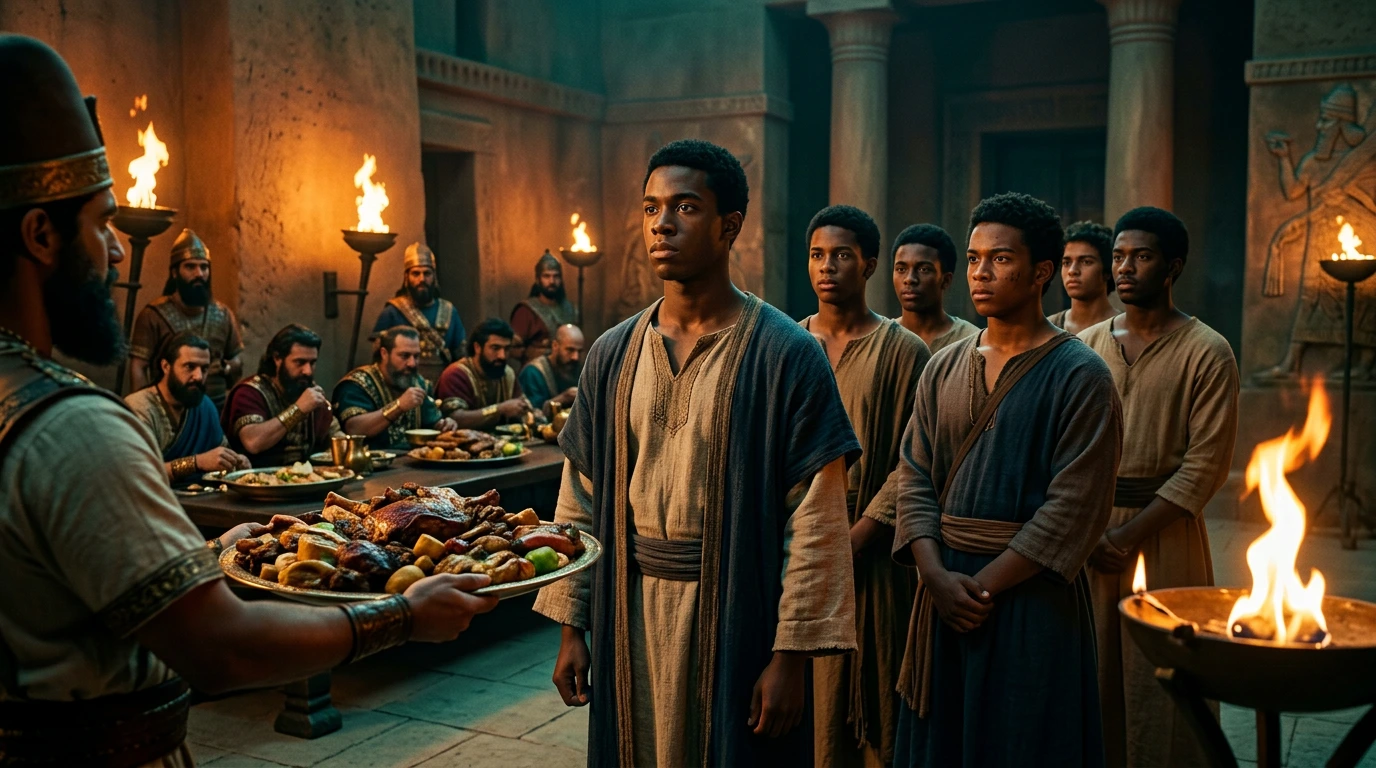
Daniel 1:8-16 describes Daniel refusing the king's food and wine, asking for "vegetables to eat and water to drink" for ten days (Daniel 1:12). Technically this is a test of diet, not a formal fast. Daniel eats; he simply eats a restricted plant-based menu.
Most modern Daniel fast rules trace their food list to this passage, not to Daniel 10.
Daniel 10: the three-week mourning fast
Daniel 10:2-3 is the clearer fast: three full weeks, no meat, no wine, no rich food, no anointing with oil. Daniel also states he was mourning, which frames the fast as grief-driven, not a fitness challenge.
Supporting passages people cite
Daniel 9:3 adds prayer, fasting, sackcloth, and ashes. Esther 4:16 and Jonah 3 are sometimes grouped in as partial-fast parallels, though Daniel's name is not on them. app/discipline-blueprint maps each one to a practice.
What did Daniel eat and not eat in Daniel 1 and Daniel 10?
Daniel 1:8-16 phrase by phrase
Verse 8 says Daniel "resolved that he would not defile himself with the king's food, or with the wine that he drank." The Hebrew for "king's food" (pathbag) covers the royal portion: rich meat dishes and delicacies from the king's table. Verse 12 makes the request specific: "vegetables to eat and water to drink."
"Vegetables" is zeroa'im, literally things sown — pulses, grains, seeds. Verse 16 records the outcome: after ten days their appearance was better than the young men who ate the royal portion. Note what the text does not say: it never mentions sugar, caffeine, bread, or a twenty-one-day length here. Those come later, from tradition.
Daniel 10:2-3 phrase by phrase
Chapter 10 shifts the picture. Daniel says, "I ate no delicacies, no meat or wine entered my mouth, nor did I anoint myself at all, for the full three weeks." Three Hebrew terms matter here. "Delicacies" (chemdah) means desirable or rich food, which most readers take to include fine bread.
No meat, no wine, no anointing oil. Fasting here is mournful and partial, not a total abstention from food.
That difference is the whole point. Daniel 1 is a rejection of the king's portion for purity's sake; Daniel 10 is grief-driven mourning before a vision.
Neither passage reads like a modern grocery list, which is why the related texts — Daniel's nine-day fast with sackcloth and ashes and Jesus's instructions on fasting in Matthew 6:16-18 — matter for how you frame your own. If you want the text before the rules, read both chapters whole, not just the food verses.
The same principle shapes how we treat daily non-negotiables at Tribal Challenge: the text first, the streak second.
How long did Daniel fast according to scripture?
Scripture gives two durations. In Daniel 1:12-14, Daniel asks for a ten-day test: "ten days" of vegetables and water before the official food is compared. In Daniel 10:2-3, he mourns for "three weeks, or twenty-one days," eating no meat or wine.
The popular 21-day Daniel fast comes from Daniel 10, not Daniel 1. Daniel 1 is ten days; Daniel 10 is three weeks of mourning over a vision, not a group challenge.
Neither passage prescribes a duration for all believers. Daniel fasts in response to specific circumstances, so the length you choose is your call. app/bible-verses-about-discipline.
How do modern Daniel fast rules differ from the biblical text?
Rules that are textual
Three phrases come straight from the text: Daniel asked to be tested for ten days (Daniel 1:12), he refused the king's food and wine (Daniel 1:8), and for three weeks he ate no meat or wine and touched no delicacies (Daniel 10:3).
The Hebrew word behind "vegetables" in Daniel 1:12 is zeroa' (sown food, pulse), and pesach appears in Daniel 1:16 for what he then ate; both point to plant-based eating, per Bible Hub's lexicon notes.
Rules that are inferred
"No meat, no wine" is stated, but "fruits and vegetables only" is an inference from zeroa', which covers grain and pulse, not a produce-only list. Water-only drinking is inferred too: Daniel 1:12 says "water to drink," but Daniel 10 says nothing about beverages.
Rules that are traditional additions
No caffeine, no sugar, no leavened bread, and the fixed 21-day length are all additions. Scripture names no specific foods beyond meat, wine, and delicacies, and 21 days comes from Daniel 10:2's "three weeks," which later tradition fixed as a calendar rule.
Modern rule Basis No meat or wine Textual Plant-based eating Textual (inferred foods) Fruits and vegetables only Inferred Water only Inferred 21 days Traditional No caffeine, sugar, or bread Traditional
If you want a framework that separates the non-negotiables from the extras, the Tribal Challenge FAQ explains how its 13 daily disciplines handle that distinction.
Is the Daniel fast a biblical command or a personal choice?
Scripture never commands the Daniel fast. Daniel 1:8 and Daniel 10:2-3 describe what Daniel chose under specific circumstances; they record his practice, not a rule for yours. Nowhere does the text say "do likewise."
What the New Testament does assume is fasting itself. Jesus says "when you fast," not "if" (Matthew 6:16-18), so the discipline is expected even though no food list is mandated. Everything beyond that, the specific vegetables, water, and 21-day duration, is a modern derivation from Daniel's example.
That means you have freedom in application. If a 21-day partial fast helps you lock in, run it. If grace days keep you from restarting for the fifth time, Paul's "each one should be fully convinced in his own mind" (Romans 14:5) covers that too.
Which scriptures should you read before starting a Daniel fast?
Read four passages before day one. Start with Daniel 1:8-16, where Daniel resolves not to defile himself with the king's food, and Daniel 10:2-3, the three-week fast of mourning with no meat or wine. Those two texts are the whole biblical case.
Then read Matthew 6:16-18, where Jesus assumes his followers will fast but warns against doing it to be seen by others. That passage sets the motive check most men skip.
Finally, pair it with a discipline passage such as 1 Corinthians 9:24-27 on running to win, or Proverbs on self-control, so your non-negotiables are anchored in text rather than willpower.
The 21-day Daniel Fast plan at Tribal Challenge builds each day around scripture reading, which keeps the text in front of you instead of behind you.
How do you turn the Daniel fast into a daily discipline you won't restart?
If you keep restarting, the problem is usually not willpower. It's that a fast on its own has no structure around it, so day 4 becomes negotiable.
Scripture treats fasting as one practice inside a wider rule of life: Daniel prayed three times daily (Daniel 6:10), read from the Law, and kept his food boundaries as part of an already-ordered day. A fast you bolt onto an unordered day will not hold.
So build the frame first. Pick your non-negotiables: a set time for prayer, a passage you read before checking your phone, your food boundaries written down, and one accountability partner who knows when you miss. Grace days are not failure; Daniel himself ate at royal tables before he refused (Daniel 1:8).
That's the honest pitch for our own product: Tribal Challenge pairs a 21-day Daniel Fast track with prayer, scripture, movement, and a 15-tribe community, built for men tired of starting over.
Where it falls short of the text: it adds traditional food rules Daniel 1 and Daniel 10 never state, and 21 days is a chosen frame, not a scriptural duration. If you want the text alone, run the fast yourself from the passages above.
If you want the frame that keeps you locked in, the structure is there.
FAQ
What does the Bible say about the Daniel fast?
The Bible never commands a Daniel fast. It records two episodes where Daniel restricted his diet: ten days of vegetables and water in Daniel 1:8-16, and three weeks without meat, wine, or delicacies in Daniel 10:2-3.
Everything else, including fixed food lists and durations, is derived from those descriptions rather than stated anywhere in the text.
Where is the Daniel fast in scripture?
Daniel 10 describes a three-week mourning fast with no meat, wine, or rich food. Two passages carry the whole case: Daniel 1:8-16 and Daniel 10:2-3. Daniel 1 describes his refusal of the king's food and wine in favor of vegetables and water for a ten-day test.
Daniel 9:3 and similar passages are supporting material people sometimes add.
How long is the Daniel fast in the Bible?
Scripture gives two durations: ten days in Daniel 1:12-14 and three weeks, or twenty-one days, in Daniel 10:2-3. The popular 21-day version comes from Daniel 10, not Daniel 1. Neither passage prescribes a length for anyone else, so the duration you choose is your own decision, not a scriptural requirement.
What did Daniel eat during his fast?
In Daniel 1, Daniel ate vegetables and drank water, where the Hebrew word for vegetables covers things sown: pulses, grains, and seeds. In Daniel 10, he simply abstained, eating no meat, no wine, and no delicacies. Neither passage mentions sugar, caffeine, bread, or a produce-only list; those restrictions come from later tradition, not the text.
Is the Daniel fast a commandment or a choice?
It is a choice. The passages describe what Daniel did under specific circumstances; nowhere does the text say to do likewise. The New Testament does assume fasting itself, since Jesus says "when you fast" in Matthew 6:16-18, but no food list or duration is mandated.
Paul's words in Romans 14:5 leave the application to your own conviction.